
FROM THE BUCKET REVIEWS ARCHIVE
Review: Sherlock Holmes - A Game of Shadows
Danny Baldwin · December 20, 2011
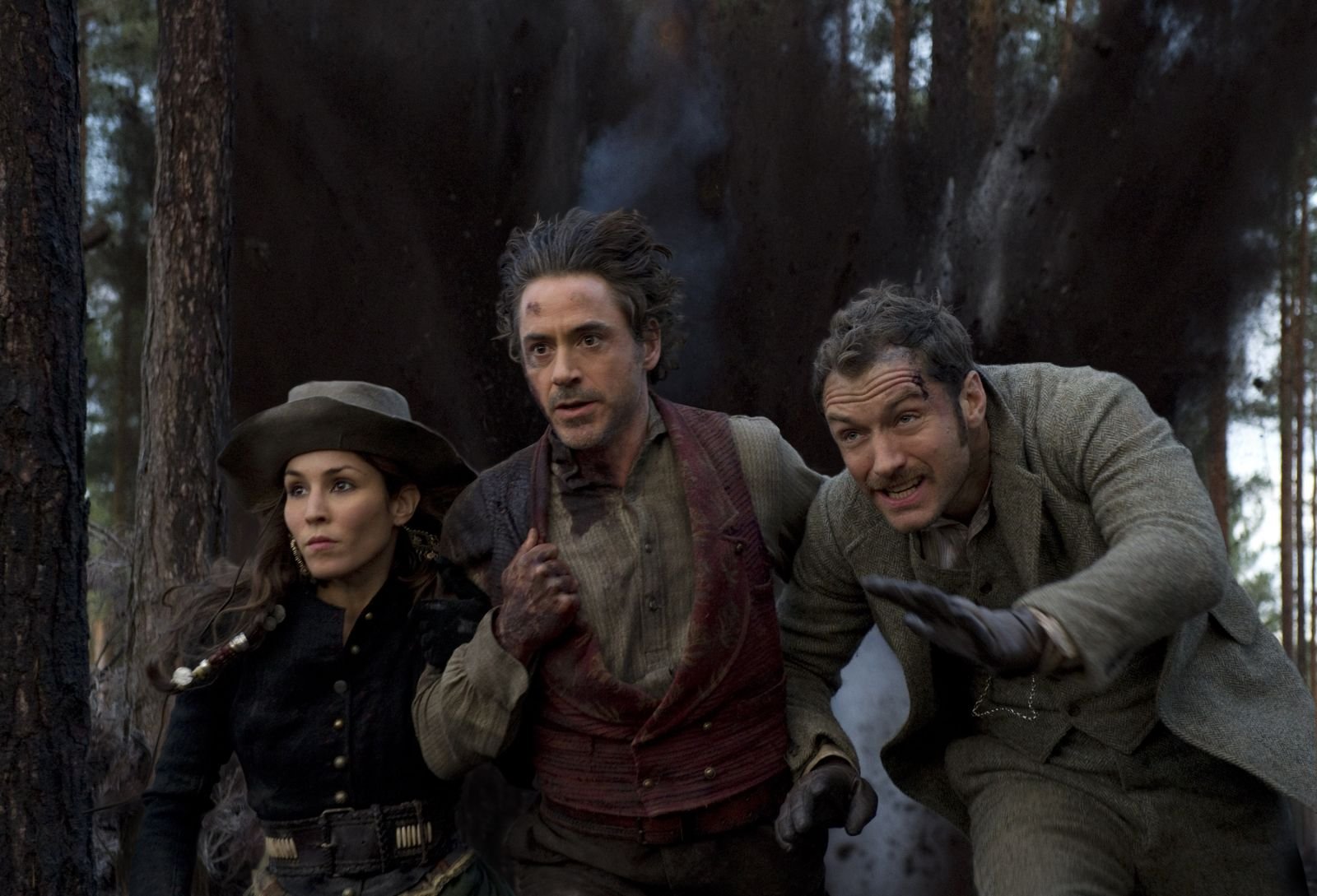
 I must be allergic to Guy Ritchie. Every time I watch the latest movie by the man who is more famous for his short-lived marriage to Madonna than anything he has committed to celluloid, I almost instantaneously zone out due to boredom. He employs the most amateur of action filmmaking strategies: even though there is very little happening, make it seem like there is a lot.
Sherlock Holmes: A Game of Shadows proves no exception to the Ritchie Rule; he manages to make the simplest of plots seem incomprehensible through a constant barrage of aesthetic devices. In this sequel to the 2009 blockbuster, Robert Downey Jr.’s violent version of the Arthur Conan Doyle detective faces off with nemesis Professor Moriarty (Jared Harris), who is carrying out assassinations as part of an anarchist plot. That’s really all there is to the movie, but in the midst of Ritchie’s chaotic action scenes with shots lasting no longer than three seconds–that is, unless he chooses to indulge in some silly trademark slow-motion–you’ll probably find yourself confused.
Every one of Ritchie’s action sequences–no matter what the film–stresses that explosions are going off, guns are firing, and hand-to-hand combat is taking place, but rarely who is responsible for them. Sure, we know the basic characters involved, but what precisely is taking place often remains an enigma, thanks to the frantic cinematography and editing style. Only those with a primal love of the interjection–a.k.a. teenage boys–are likely to be involved in Sherlock Holmes: A Game of Shadows’ many action set-pieces.
As if Ritchie’s bloated action wasn’t enough to pad the excruciatingly long 129-minute running length, screenwriters Michele and Kieran Mulroney added some new characters, who prove equally distracting. Noomi Rapace, the original Girl with the Dragon Tattoo, plays a gypsy who helps Holmes stay one step ahead of Moriarty, showing none of the charisma she did in her previous role. With a few re-writes, the character could have been eliminated. Stephen Fry is spunkier as Holmes’ older brother, who spends a good portion of his screen-time in the nude, but is just as unnecessary to the core plot.
What’s even more confusing about these additions is that the film essentially uses them to replace the original’s most interesting character: Rachel McAdams’ Irene, who appears for 10 minutes at the beginning, then becomes a non-issue. The Mulroneys could have done so much with Irene’s unique predicament–she works for Moriarty, but is Holmes’ romantic interest–but they instead opt for superfluous filler.
As was the case with the first Sherlock Holmes, the vaguely homoerotic chemistry between Holmes and Jude Law’s Watson is the best thing about the film. While ultimately drowned out in the action, there are a few added facets to the relationship — namely Holmes’ peeved attitude towards Watson’s new wife (Kelly Reilly).
Sherlock Holmes: A Game of Shadows reaches the height of its climax during a clever, symbolic game of chess between Holmes and Moriarty. More than a reprieve from the mindless rumpus of the rest of the film, the scene is a disheartening reminder of what the film could have been: a competent holiday popcorn movie. Unfortunately, with Guy Ritchie at the helm, competence couldn’t be farther from the realm of possibility.
* * *
Sherlock Holmes: A Game of Shadows (2011, USA). Produced by Bruce Berman, Steve Clark-Hall, Susan Downey, Peter Eskelsen, Dan Lin, Joel Silver, and Lionel Wigram. Directed by Guy Ritchie. Written for the screen by Michele Mulroney and Kieran Mulroney, based on the characters by Arthur Conan Doyle. Starring Robert Downey Jr., Jude Law, Noomi Rapace, Rachel McAdams, Jared Harris, Stephen Fry, Paul Anderson, Kelly Reilly, Geraldine James, and Eddie Marsan. Distributed by Warner Bros. Rated PG-13, with a running time of 129 minutes.