
FROM THE BUCKET REVIEWS ARCHIVE
AFI Fest 2011: This is Not a Film & Snowtown
Danny Baldwin · November 8, 2011
 There is no greater rush at the beginning of November than picking up my AFI Fest press badge and hitting the theater. I have unfortunately been unable to attend the West Coast’s best film festival for two years, so it’s especially sweet to be back. While my schedule prevents me from taking on the rigorous viewing regimen I did back in 2007 and 2008, when I saw 25+ films over the course of the festival, I hope to catch my fair share of great movies. If you haven’t yet read my pre-festival reviews (for The Color Wheel, Green, Jiro Dreams of Sushi, and Kill List), be sure to check them out here. The following are reviews for the first two films I saw “in regulation”:
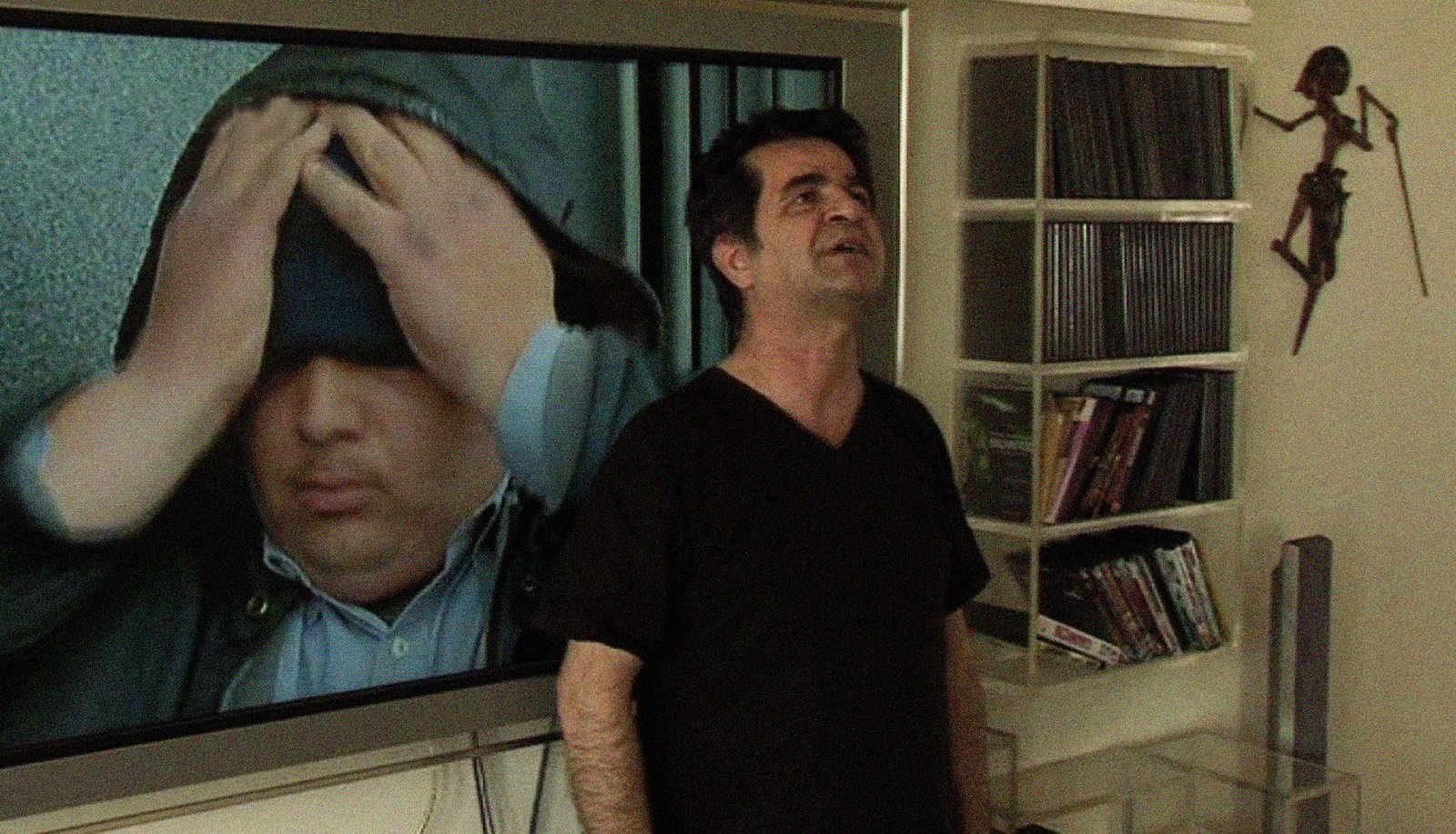
Jafar Panahi ruminates before a scene of his Crimson Gold in the remarkable This is Not a Film.
Since his 2009 arrest at the site of a noted Iranian election protestor’s grave, cinephiles have intensely followed the legal case of beloved director Jafar Panahi (The Circle, Offside), through his subsequent imprisonment and hunger strike, then his eventual house arrest and 20-year ban from filmmaking. Given the totalitarian nature of the Iranian government, there was no reason to believe we would have access to Panahi for that period of time, if ever again — his official sentence barred him from directing and writing films, as well as giving interviews. But keeping the man away from a camera was more difficult than his oppressors bargained for. Just five years after Panahi’s last movie, we now have This is Not a Film, a quasi-documentary shot entirely from the confines of Panahi’s apartment building and smuggled out of the country by flash drive.
The opening scenes of This is Not a Film are somewhat alarming, in that they do not adhere the conventional imagery of an oppressed individual. For all that he has been through, Panahi seems calm and collected as he eats his breakfast, talks with his lawyer on the phone, and babysits his daughter’s pet iguana. Soon enough, however, we realize that Panahi’s real agony lies in the fact that he is not able to do what he was meant to do: make films. While his collaborator Mojitaba Mirtahmasb mans the camera, Panahi describes in vivid detail what was supposed to be his next picture, even conducting line-readings from the script as he stands in a crudely taped blueprint of the protagonist’s home. These scenes are extended and gratingly monotonous, as well they should be — they perfectly depict Panahi’s inner-anguish that he was stripped of his artistic voice. He also reviews scenes from his past films and shares pieces of directorial wisdom, such as how to work with a non-actor as he did in 2003’s exceptional Crimson Gold, wherein the viewer further realizes just how much the man is defined by his craft.
But for as much as This is Not a Film depicts an individual robbed of his livelihood, it is also about his reclaiming it. While the piece technically respects the idea that Panahi cannot legally make films–in one scene, he tells Mirtahmasb to “Cut!”, to which Mirtahmasb reminds him that he cannot direct–Panahi isn’t about to allow a technicality from keeping him from his art. In the final minutes of the film, the filmmaker has an elevator-based chat with a peculiar young man who takes out the trash for the building. Aside from the style–Panahi plays documentarian, holding the camera and asking the man questions–this sequence is as compelling and socially substantive as anything he has ever done before. And the final shot, which I cannot give away in order to preserve its goosebump-inducing spontaneity, stands a bold statement of Panhi’s resistance.
This is Not a Film is obviously not for those unfamiliar with Panahi–not only do they lack the necessary context, but they wouldn’t get the same effect not having experienced the richness of the filmmaker’s past works–but it is absolutely essential for those who are. That said, everyone interested in cinema and/or Iran owes it to themselves to become familiar with an artist who, I can happily note, continues to be a major force in contemporary international cinema with This is Not a Film. 3-1/2 Buckets out of 4.

Daniel Henshall stars as John Bunting in Snowtown.
Midway through the Australian film Snowtown, about the serial killer John Bunting (here played by Daniel Henshall), I thought to myself: “What would David Fincher have done differently?” The reaction was not so arbitrary, given that Fincher has made two of the best films on serial killers in recent history and arguably all of film history. As Snowtown moved from one brutally violent scene to another, dramatizing Bunting’s crimes with repetitious abandon, I found my answer: Fincher wouldn’t have made the movie at all.
I am all for movies that depict life in even the worst of forms, but they must do so for the purpose of allowing audiences to understand something that they otherwise would not have realized. Through its relentless depictions of Bunting’s crimes and his relationship with a 16-year-old accomplice (Lucas Pittaway), Snowtown doesn’t tell us anything we don’t already know. The two main themes that co-writer/director Justin Kurzel seems to extoll are that murder is heinous and that serial killers (like cult leaders) are often charismatic and alluring — hardly new ideas. Furthermore, given that this is a drama, not a documentary, viewers can’t even claim to have experienced a comprehensive chronicle of Bunting’s life. Thus, the experience of watching Snowtown amounts to a sort of masochism for the viewer — how much violent content are they willing to endure for little potential benefit?
In most technical respects, the movie is impeccably made, but for what? Yes, actor Daniel Henshall–a complete unknown to American audiences–is terrifying as Bunting, a man who was both a monster and a dynamo in the community. Henshall chills the spine in nearly every scene he is in — from the murders themselves, to those that find him grandstanding about the ills of local pedophiles (his main victims). Yes, Lucas Pittaway gives an equally striking debut performance as the neighbor kid who Bunting was able to coax under his wing. And yes, Kurzel’s direction is as gritty and disquieting as you’d expect for the material. But when the end result of all these great elements is a film that puts the viewer through hell without any accompanying enlightenment, have they not been completely wasted? I think so, and as such, Snowtown is a failure. 1-1/2 Buckets out of 4. Screens again Wed, Nov 9 at 1:30 p.m.
That’s all for now, but be sure to keep checking back for more reviews all week. And, need I remind you again that AFI Fest is completely free to the public for the third year in a row, so if you are in LA, you have no excuse for not booking tickets and experiencing it for yourself.