
FROM THE BUCKET REVIEWS ARCHIVE
Review: Drive
Danny Baldwin · September 19, 2011
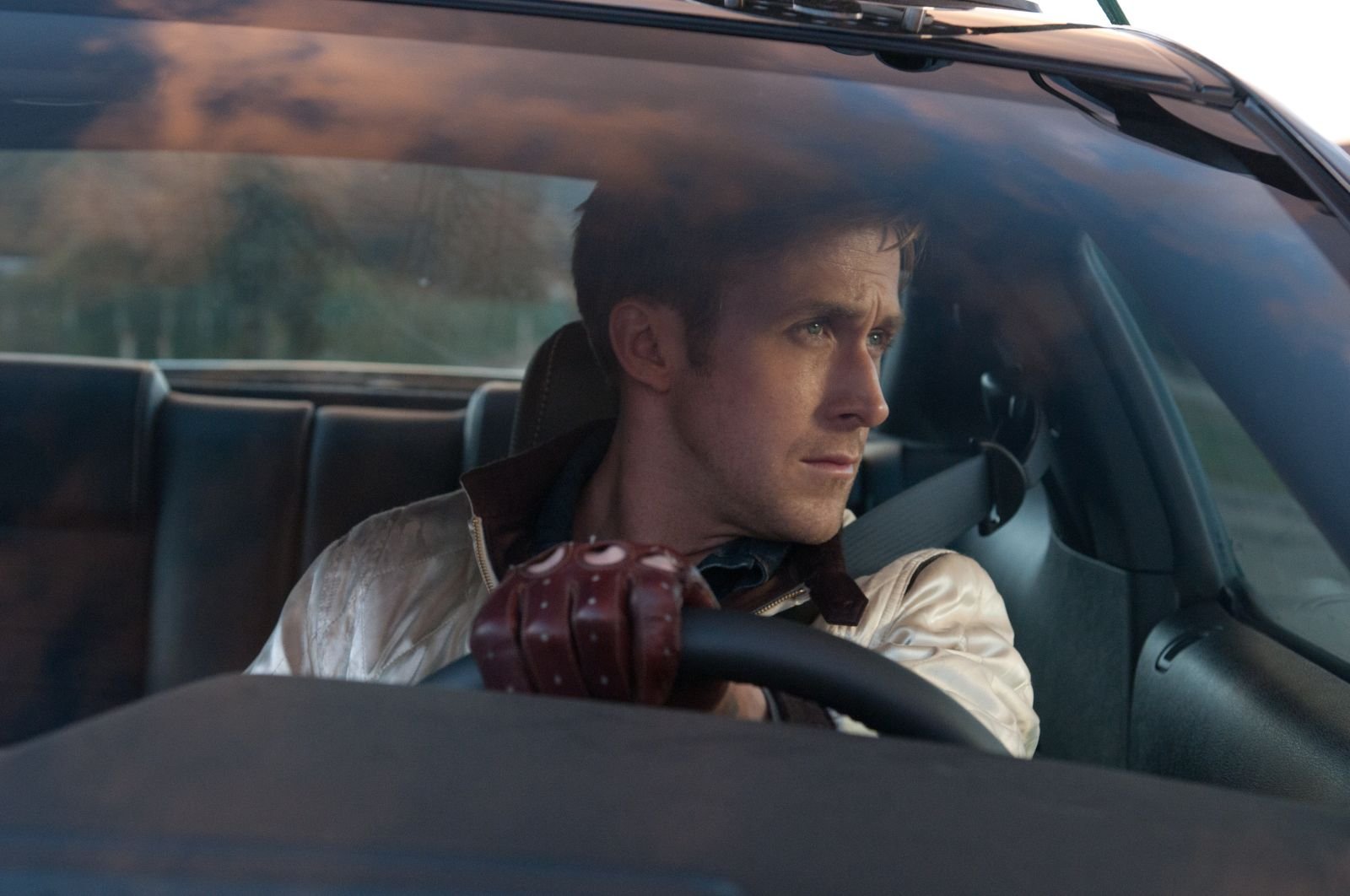
 There is so much right with Nicolas Winding Refn’s Drive, but the tone that the director strikes late in the film–and, in turn, the film’s perceived attitude toward violence–essentially renders the great stuff all for naught. I make this assertion at the risk of sounding like a cultural prude, not unlike those who condemned Kill Bill for its cheerful depiction of bloodshed, but the truth is that I would not be criticizing the film if it boasted Quentin Tarantino’s comparably wholesome sensibilities (imagine that).
Refn crosses the line in that, as the auteur, he chooses to celebrate the gruesome nature of the real-world-set violence. This contradicts the Tarantino approach, which either places the celebration in a delineated alternate reality–Inglorious Basterds’ completely revised history of World War II, Kill Bill’s Movie Reference Land–or leaves the celebration to the audience (Pulp Fiction, Reservoir Dogs). Even the most entertaining of grisly mafia movies don’t often come with the director’s stamp of approval. But Refn, in a move of the ultimate directorial self-indulgence, uses a uniformly stylized approach that suggests he wants the viewer to fetishize everything onscreen, violence included. This isn’t to say that I embrace the age-old philosophy of parents groups that a violent movie must condemn its violence to be moral; audiences are surely smart enough to discern when characters are in the wrong. However, just because Refn’s second and third act choices aren’t necessarily socially ‘dangerous’ doesn’t mean that they are any less morally and artistically bankrupt.
Refn’s handling of the end violence–which I will not detail here, out of respect to those who would like to see the movie–is unfortunate, because his work is virtually flawless from a technical perspective. Drive oozes style and, particularly through night-shots and extended slow-motion sequences, forms the distinctive voice you want from an auteur project (even though this voice is what gives Refn the power to do so much damage later). While cinematographer Newton Thomas Sigel’s digital compositions look a bit scrubbed for my tastes–I often would have preferred a grainy 16mm look–he and Refn have undoubtedly captured one of the more compelling visions of Los Angeles in recent cinema. And don’t even get me started on the chase sequences, which are orchestrated with pulse-pounding precision; they could each be their own short film.
Furthermore, Refn gets some really strong performances out of his actors — Ryan Gosling as the existential, cryptic lead; Carey Mulligan as the love-interest quietly fascinated by his enigma; and Albert Brooks as the seriously terrifying bad guy. Brooks’ delivery of his character’s most heinous moments are enough to make you momentarily forget about how wrong-headed Refn’s treatment of them is. But as good as Drive can be, there is no excusing the director’s undeniable embrace of brutality, which transcends that of an exploitation flick and becomes needlessly deplorable. Refn may be a seasoned student of cinema, but he lacks the judgment needed to be a filmmaker.
* * *
Drive (2011, USA). Produced by Frank Capra III, Garrick Dion, David Lancaster, Bill Lischak, Michel Litvak, Linda McDonough, John Palermo, Marc Platt, Gigi Pritzker, Chris Ranta, Adam Siegel, Jeffrey Stott, and Gary Michael Walters. Directed by Nicolas Winding Refn. Written for the screen by Hossein Amini, based on the book by James Sallis. Starring Ryan Gosling, Carey Mulligan, Bryan Cranston, Albert Brooks, Oscar Isaac, Christina Hendricks, Ron Perlman, and Kaden Leos. Distributed by FilmDistrict. Rated R, with a running time of 100 minutes.