
FROM THE BUCKET REVIEWS ARCHIVE
Review: The Adventures of Tintin
Danny Baldwin · December 22, 2011
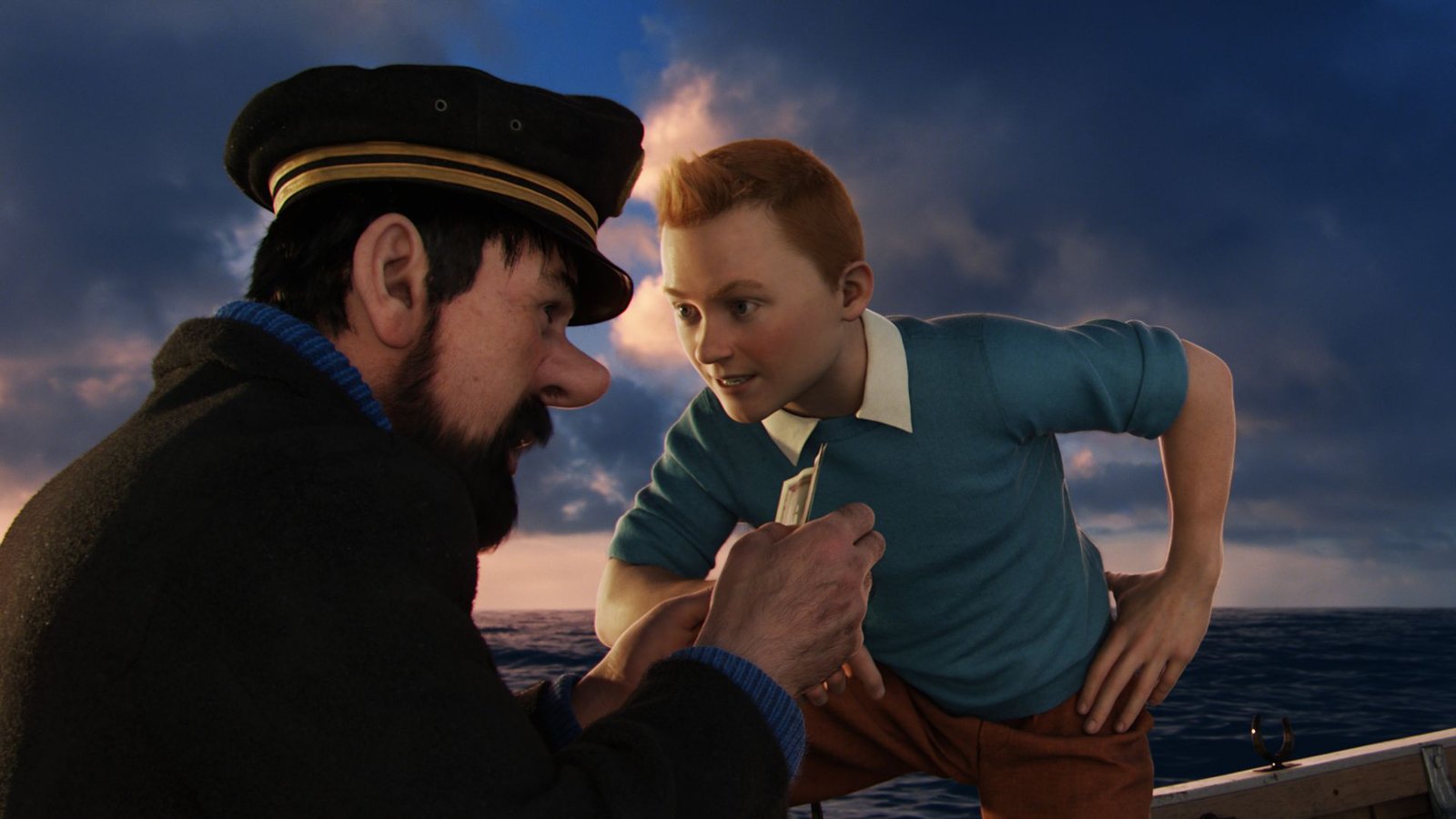
 Leave it to Steven Spielberg to use the most cutting-edge in today’s motion-capture technology–in partnership with WETA Digital, the company that did the special effects on Avatar–to make one of the most gloriously old-fashioned action films of the year. Even though it is animated and in 3-D, The Adventures of Tintin finds Spielberg returning to the brand of boyish adventure he popularized in the Indiana Jones films, which were themselves an homage to the action serials of the 1930s.
In terms of storytelling, you won’t find a simpler, purer adventure all year, which is refreshing in light of the sheer incoherence of the film’s fellow genre tent-pole, Sherlock Holmes: A Game of Shadows. Based on a long-running comic book created by the Belgian artist Hergé, which is extremely popular overseas but virtually unheard of in America, the plot is a lovely spin on the ‘ol “sunken treasure” yarn. Young investigative journalist Tintin (Jamie Bell) and his trusty canine companion, Snowy, team up with the drunken Captain Haddock (Andy Serkis) to find the Haddock family’s lost jewels, much to the chagrin of antagonist Sakharine (Daniel Craig), who is also pursuing the loot.
While The Adventures of Tintin may not be on the same level as Indiana Jones or Star Wars, it carries the same sense of unbridled, youthful wonder that those films do — a love of adventure for adventure’s sake that has been lost in contemporary Hollywood. Spielberg trusts in the charisma of his characters and the nostalgic nature of his premise (which is actually substantive, because it forces the viewer to take on a different frame of viewership–the one they had as a child), and the result is a rousing story.
The Adventures of Tintin is not just old-fashioned in terms of its narrative, however. In certain regards, Spielberg utilizes the latest technology to make the movie more like a traditional adventure film, not less. For instance, because motion-capture allows the filmmaker to cinematograph scenes in post-production (as opposed to exclusively in-camera), Spielberg is able to achieve shot-lengths that are unheard of in this day and age. Instead of cutting to a new angle every three seconds, he leisurely swoops throughout each set-piece, giving the film an epic scope. There is one jaw-dropping take that lasts nearly three minutes.
The other traditional element that motion-capture technology empowers is the use of performances. I doubt that the characters in The Adventures of Tintin would have carried the same sense of old-fashioned magnetism if they had been traditionally animated. From Jamie Bell’s inquisitiveness to Andy Serkis’ comic inebriation to Daniel Craig’s classic menace, the presence of each character translates extremely well despite the film’s animated appearance.
The distinct aesthetic quality of motion-capture animation does surprising justice to the two-dimensional source material, as well. Even though The Adventures of Tintin looks uncannily “real” in many respects–from the settings to the spatial relationships between objects–the characters retain the cartoonish look that distinguished them in the comics. This blend never feels unnatural — just appropriately unique to the material.
As for the 3-D effects (the other primary visual component of motion-capture): they are pleasantly unobtrusive, if not entirely necessary. Image dimness is never an issue and the illusion of depth presented feels realistic, but the movie lacks the truly innovative use of the technology seen last month in Hugo. If you like 3-D, then the surcharge for the glasses is probably worth it in this case; otherwise, don’t bother.
Female viewers may feel somewhat excluded from the fun at first, as this is the most male-dominated mainstream release since Master and Commander. But The Adventures of Tintin should play well with just about anyone who loves classic adventure films and/or is tired of the postmodern stylings (to put it politely) of today’s action blockbusters. It may not be one of Spielberg’s most original pictures, but it’s one of his most genuine.
* * *
The Adventures of Tintin (2011, USA). Produced by Peter Jackson, Ken Kamins, Kathleen Kennedy, Jason D. McGatlin, Nick Rodwell, Adam Somner, Stephane Sperry, and Steven Spielberg. Directed by Steven Spielberg. Written for the screen by Steven Moffat, Edgar Wright, and Joe Cornish, based on the comic book series by Hergé. Starring Jamie Bell, Andy Serkis, Daniel Craig, Nick Frost, Simon Pegg, Daniel Mays, Gas Elmaleh, Toby Jones, and Joe Starr. Distributed by Paramount Pictures. Rated PG, with a running time of 107 minutes.